

The front page announced the United War Work Campaign, a national effort to raise$170,500,000 for soldiers’ welfare. The article stressed that for the first time, “Protestants, Catholics and Jews will line up shoulder to shoulder,” with seven great agencies working as one the YMCA, YWCA, Knights of Columbus, Jewish Welfare Board, War Camp Community Service, American Library Association, and the Salvation Army. General Pershing’s words filled a bold headline “Give me nine men who have a hut and I will have a more effective fighting force than if I had ten men without it.” Locally, Schoharie County’s quota stood at $25,000, a remarkable sum for the time. The Monitor urged every citizen to give “with the same courage our boys are showing in France.” Donations of money, linens, and comfort kits were requested from each township. Women’s committees met in parlors to fold bandages, while Red Cross members prepared care packages for hospitals. “The articles may not be used to alleviate the suffering of our boy,” one line read, “but they will be used for some other boy.” It was the language of quiet sacrifice, typical of that wartime October. The war reports ran beside notices of everyday life, showing how the extraordinary had become ordinary. Over 2,300 men in Schoharie County, ages 18 to 45, had registered under the latest draft law. The paper carefully explained how questionnaires would be mailed out, and that men needed to “fill them with absolute accuracy,” as penalties awaited those who ignored them. In neighboring towns, families still read letters from the front aloud at supper. One young soldier wrote home describing France’s rolling hills “They look like the ones around home except we haven’t as many pines.”
There were reminders of discipline at home, too. Citizens were asked to observe “meatless” and “wheatless” days as part of food conservation. “Those who fail in the small things,” one editorial warned, “help to make the war last a day longer.” It was a message that tied the rural routine of cooking and farming directly to the trenches of Europe. Amid the heavy news, local updates kept the village grounded. An early snow fell over Summit and Richmondville, catching travelers unprepared on the winding roads. Partridge season was nearly over, and deer licenses were now available. Families shared short notes about visiting neighbors or moving cows to winter barns. Doctors made weekly stops in town, and the Baptist and Methodist churches announced Sunday meetings, suppers, and donations for missionary causes. Advertisements offered a glimpse into how life continued under wartime strain. Wyckoff & Lewis sold coal, lumber, and farm equipment priced fairly for the duration. D. & H. Coal promised dependable fuel supply, while the National Bank of Stamford encouraged residents to open accounts to “help rebuild after victory.” A full page ad for
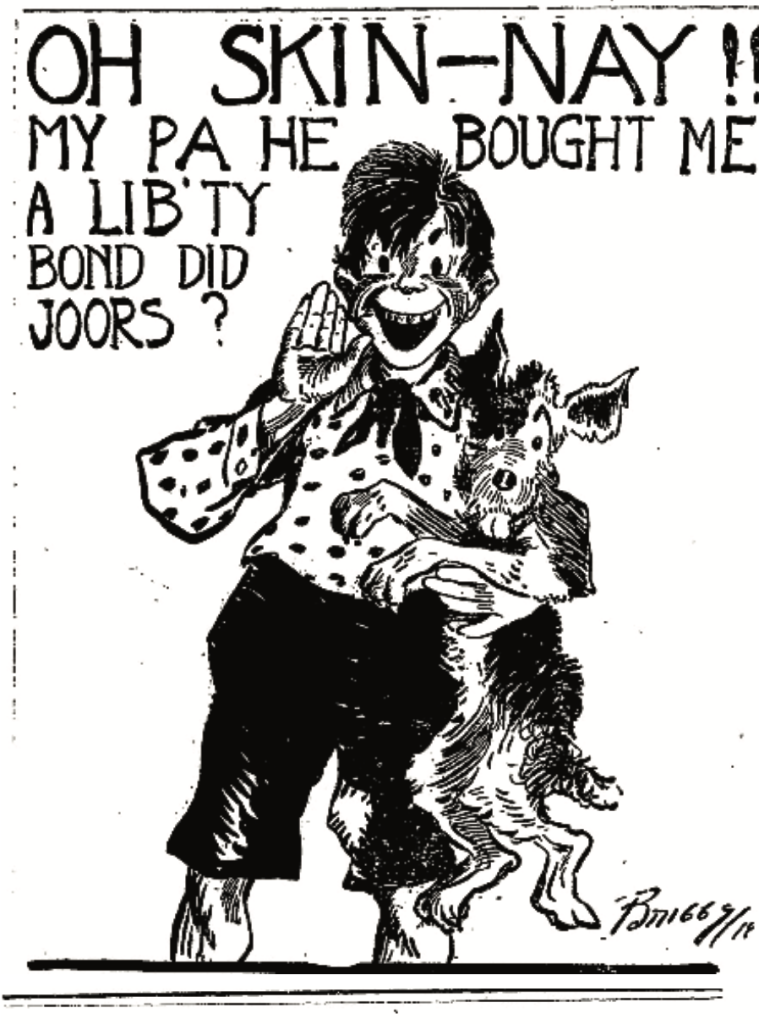
Liberty Bonds reminded readers that “Peace will come only when we’ve earned it.”
Through it all, the community carried on with quiet resolve. The Red Cross linen drives, the church socials, and the small town announcements gave structure to uncertain days. Even the lighthearted notes carried undertones of patience and pride. A local joke about daylight saving time“Some confusion exists as to when the clock should be turned back an hour” felt almost symbolic for a people eager to turn time back to normal life. In these pages, Gilboa appears both humble and steadfast a farming village that measured the war not in battles or speeches, but in letters home, quilts sewn, and dollars raised. The Monitor captured that spirit in every column a small place doing its share of a great task. When readers picked up their papers that October, the end of the war was still weeks away. But the words on the page carried a sense of nearing peace. Between the notices of cider mills and early frosts, Gilboa’s people could finally sense that the long shadow of war was lifting and that soon, their boys would be home.
This article was originally published on The Mountain Eagle